LLANRHIDIAN PRIMARY SCHOOL
Inspiring our learners to be the best they can be!
Literacy
L.O: To communicate imaginative ideas through writing for an audience.
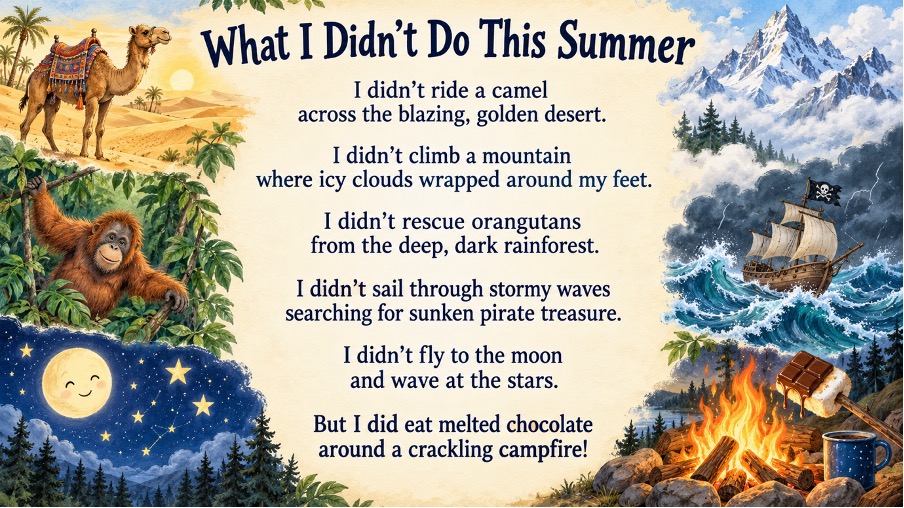
Summer Holidays Poetry
It has been a wonderful summer break, and we often talk about, and ask, 'What did you get up to?'
But we rarely ask... 'What didn’t you do?'
I wonder what wonderful, imaginative and impossible adventures you didn’t get up to over the holidays!
Did you climb a mountain?
Sail through a storm?
Travel to the moon?
Let’s use our imaginations to write our own poems about what we didn’t do this summer!
Your task
-
Write a poem called What I Didn’t Do This Summer.
-
Write about imaginative, exciting or impossible things you did not do in the summer holidays.
-
You may use the phrase “I didn’t...” to begin your lines.
-
Finish with one real or funny thing that you did do this summer, beginning with “But I did...”
-
Do your very best writing. Read it back and check it makes sense.
-
Make sure you write in your best handwriting. We will be creating our handwriting targets for the term from this.
L.O: To communicate ideas clearly in writing for a specific purpose and audience.
Mystery Egg Rescue!
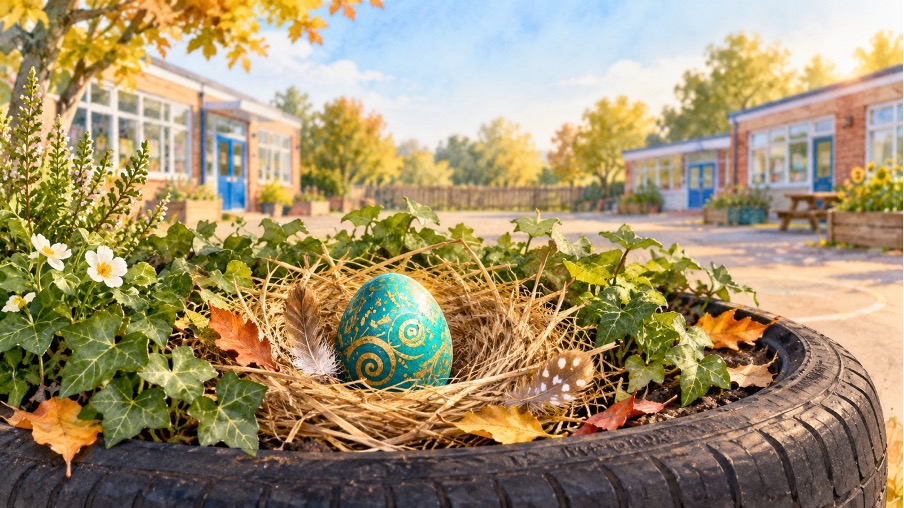
Pod Pry Cop arrived with their eyes peeled this morning as they spotted something very unusual hiding in the tyre planter between our two classrooms!
A small, ornate egg has been discovered in a nest. We do not know what creature might be inside, but we know that it will need to be looked after until it hatches. What creature could have laid it there? What could hatch from it?
I wonder...
What might it need?
What could harm it?
What should we do — and what should we definitely not do?
First, decide what you think may hatch from the egg. Will it be an animal you have seen before, or something completely new?
Then write a clear set of instructions explaining how to care for the egg. Give your instructions a suitable title.
Your instructions will help the next person responsible for the egg to keep it safe.
Instructional Writing Text Marking
L.O: To identify and discuss the key language, structural and presentation features of an instructional text.
Wildlife Helpers
As autumn arrives, it can become harder for garden birds to find the food they need.
I wonder... how could we help the wildlife on our doorstep?
We have discovered some instructions showing us how to make bird feeders - but are they clear, useful and easy to follow?
Can you become a text detective and search for important features?
Look carefully for headings, introductions, equipment lists, numbered steps, command verbs, sequencing words, warnings and diagrams.
Which features will help us write our own brilliant animal-themed instructions?
What are the instructions missing? Add these in to make them successful!