
LLANRHIDIAN PRIMARY SCHOOL
Inspiring our learners to be the best they can be!
Safeguarding Advice For All Visitors
Safeguarding Advice For All Visitors
Please help us to keep our pupils safe!
UNCRC: Article 19 “You should not be harmed, be looked after and kept safe!”
If this is your first visit to Llanrhidian Primary School, please take a moment to read this information, which supports our safeguarding procedures.
Our aim is to provide an education where children feel happy, healthy and safe. We have rigorous child protection procedures based on a clear policy to ensure all children are safe and feel safe. All staff receive safeguarding induction and regular training in line with Local Authority guidance.
We take seriously our responsibility to:
- Prevent neglect and abuse
- Identify signs and symptoms
- Record incidents, concerns and patterns over time
What safeguarding includes
Safeguarding is not only about protection from harm. It also includes:
- Health and safety
- Behaviour (including bullying, racist and homophobic abuse, harassment and discrimination)
- Use of physical intervention
- Supporting medical needs and first aid
- Drugs and substance misuse
- Educational visits
- Online safety
- School security
- Radicalisation and extremism
Your responsibility
While in school, you share responsibility for children’s safety and wellbeing. You may notice concerns such as injuries, changes in behaviour, or disclosures from a child. Any concerns must be reported immediately to a designated safeguarding person.
Designated safeguarding persons
- Mrs Donna Caswell (Headteacher)
- Mrs Sarah Archard (Deputy Headteacher)
If neither are available, report to:
- Mrs Lisa Marchant
- Mrs Gosney
If a child discloses to you
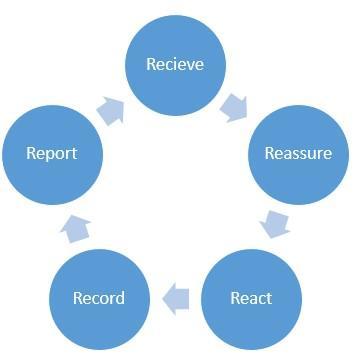

At Llanrhidian we follow the 5Rs.
Recieve
Listen carefully to what is being said, without displaying shock or disbelief. Accept what is said. Do not attempt to investigate the allegation. Your duty will be to listen to what is being said and to pass that information on.
Reassure
Provide the child with plenty of re-assurance. Always be honest and do not make promises you cannot keep, for example: “I’ll stay with you”, or, “Everything will be all right now”.
Do not promise confidentiality. You will be under a duty to pass the information on and the child needs to know this. You can say “I will only tell people who need to know to keep you safe.”
React
You can ask questions and may need to in certain instances. You can use “TED” to help you with appropriate questioning
-
T – Tell me a little more about it?
-
E – Can you explain what happened?
-
D – Can you describe what happened?
Record
Take notes as soon as it is practical to do so. Record the actual words spoken by the child – do not re-translate.
Time and date your notes and do not destroy them in case they are required by a court.
Report
Once you have followed the above guidelines, pass the information on immediately to the Designated Senior Person or the person with responsibility for Child Protection.
Thank you for helping us to keep our pupils safe!