LLANRHIDIAN PRIMARY SCHOOL
Inspiring our learners to be the best they can be!
Llythrennedd
L.O: To identify and evaluate imperative verbs in different types of instructions.
Learn
Look at the different types of instructions
-
What is each text helping the reader to do?
-
Who is the intended reader?
-
How does each text guide the reader differently?
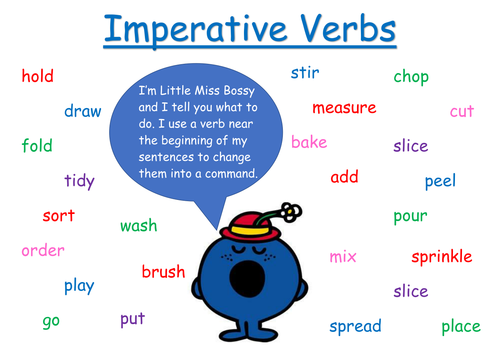
An imperative verb is a bossy verb that tells someone what to do.
For example: cut, mix, place, fold and pour.
Can you find all the imperative verbs in the text?
Some bossy verbs are more descriptive than others and can therefore be more helpful to the reader.
Understand
Sort the imperative verbs you found in the text into two groups:
- Clear command verbs
- Precise, helpful command verbs
Draw a table or diagram in your book.
Challenge - Can you include a third column to describe why is it effective for this reader?
Apply
Using your new knowledge about helpful imperative verbs, edit this basic set of instructions to be more helpful to the reader.

How to Make a Bird Feeder
- Get a bottle.
- Make holes in it.
- Put a stick through the holes.
- Put seeds inside.
- Put the feeder outside.

L.O: To make instructions clear and precise for the reader.
Instruction Clarity Doctors
A bossy verb tells the reader what to do — but a good instruction gives them enough detail to complete the task successfully.
Today, you will become an Instruction Clarity Doctor! You will read some vague instructions for creating a mini wildlife water station, then improve them to make them clear and helpful.
Think carefully:
- What does the reader need to know?
- Can you add detail about what, where, how or how many?
- Have you chosen a precise imperative verb?
- Have you added useful detail, rather than lots of unnecessary words?
Your goal is to help a complete beginner create a safe water station for garden wildlife.
How to Make a Wildlife Water Station
- Get a dish.
- Find some stones.
- Put the stones in the dish.
- Add some water.
- Put it outside.
- Look after it.
Improve each one by adding the detail a reader needs: what, where, how or how many.
Can you include precise command verbs?
L.O: To evaluate how effectively instructions guide a reader.
Spider Instruction Challenge
Today, you will test two different sets of instructions to discover what makes instructions clear and helpful.
First, follow Set A exactly as it is written. Do not ask for extra help - the instructions must do all the explaining!
Compare your spider with others in the class. Do they all look similar? What information was unclear or missing?
Then, turn your paper over and follow Set B. This time, look carefully at the detail included in each step.
As you work, think about:
- Which instructions were easiest to follow?
- Which words or details helped you?
- Why did the spiders from Set A look different?
- What makes an instruction clear enough for a reader to succeed independently?