
LLANRHIDIAN PRIMARY SCHOOL
Inspiring our learners to be the best they can be!
Amser Sgwn i
LO: To describe the features of organisms and recognise how they allow them to live, grow and reproduce for survival in their environment.
I wonder... What makes animals different and able to survive?
Here are 3 different types of environment animals could live in.
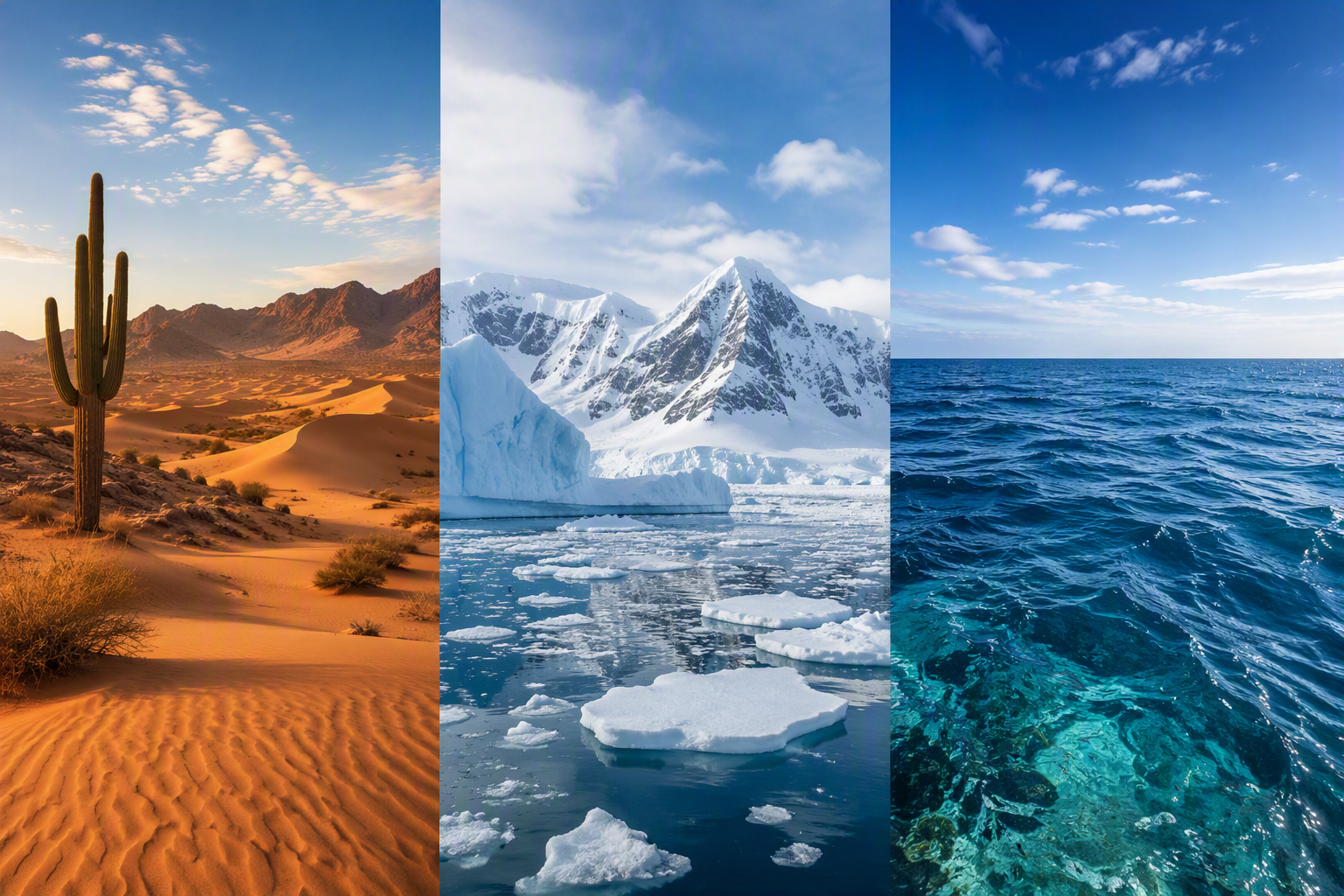
Imagine you were dropped into one of these environments. What would make it hard to survive?
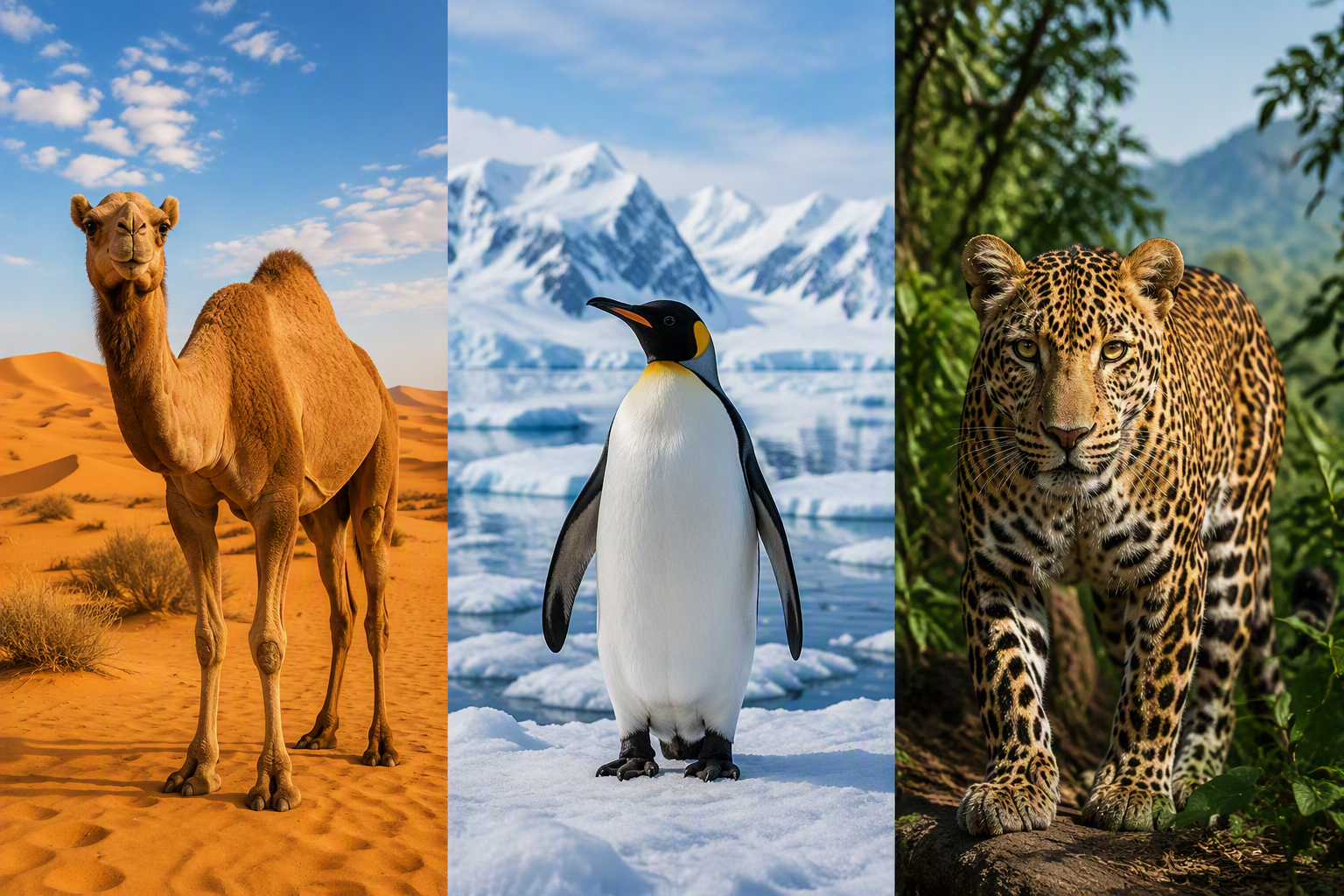
These animals all live in different places. Why do none of them look the same?
What do you notice is different about them?
Key Vocabulary:
Feature
Adaptation
Environment
Survive
Predator
Prey
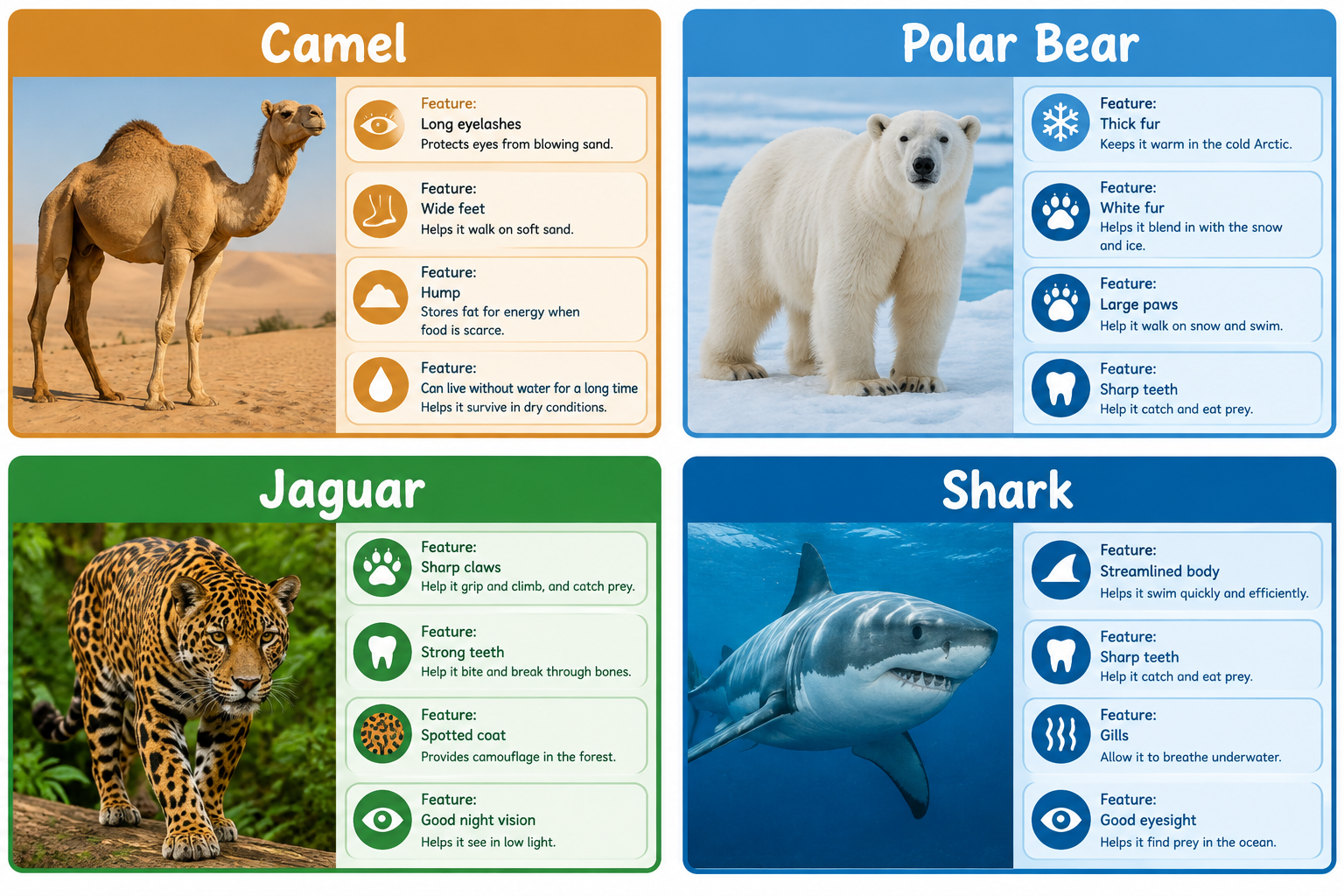
Animals have different features because they have different ways of surviving. A feature can help an animal find food, avoid predators, stay warm or cool, move around, find water or reproduce.
🐻 Polar Bear
Feature: Thick fur
How does it help?
→ Keeps the polar bear warm in the cold Arctic environment.
Feature: White fur
→ Helps it blend into the snowy environment.
Feature: Large paws
→ Help it walk on snow and swim.
🦒 Giraffe
Feature: Long neck
→ Allows it to reach leaves high in trees.
Feature: Long legs
→ Helps it move across grassland and can help it escape predators.
🐫 Camel
Feature: Long eyelashes
→ Help protect its eyes from blowing sand.
Feature: Wide feet
→ Help it walk across soft sand.
Feature: Hump
→ Stores fat which can be used as an energy source when food is scarce.
Main Task!
Why? Challenge!
Choose one feature from each animal. Explain how the feature helps them survive.
Green Chilli
The animal has __________.
This feature helps it to __________.
It needs this because __________.
Orange Chilli
The __________ has __________.
Without this feature, the animal might __________ because __________.
This feature helps the animal survive in its environment by __________.
Red Chilli
The animal's __________ is adapted to __________ because __________.
Because the animal lives in __________, its __________ allows it to __________.
If the animal did not have this feature, __________ might happen because __________.
The feature and the environment are connected because __________.
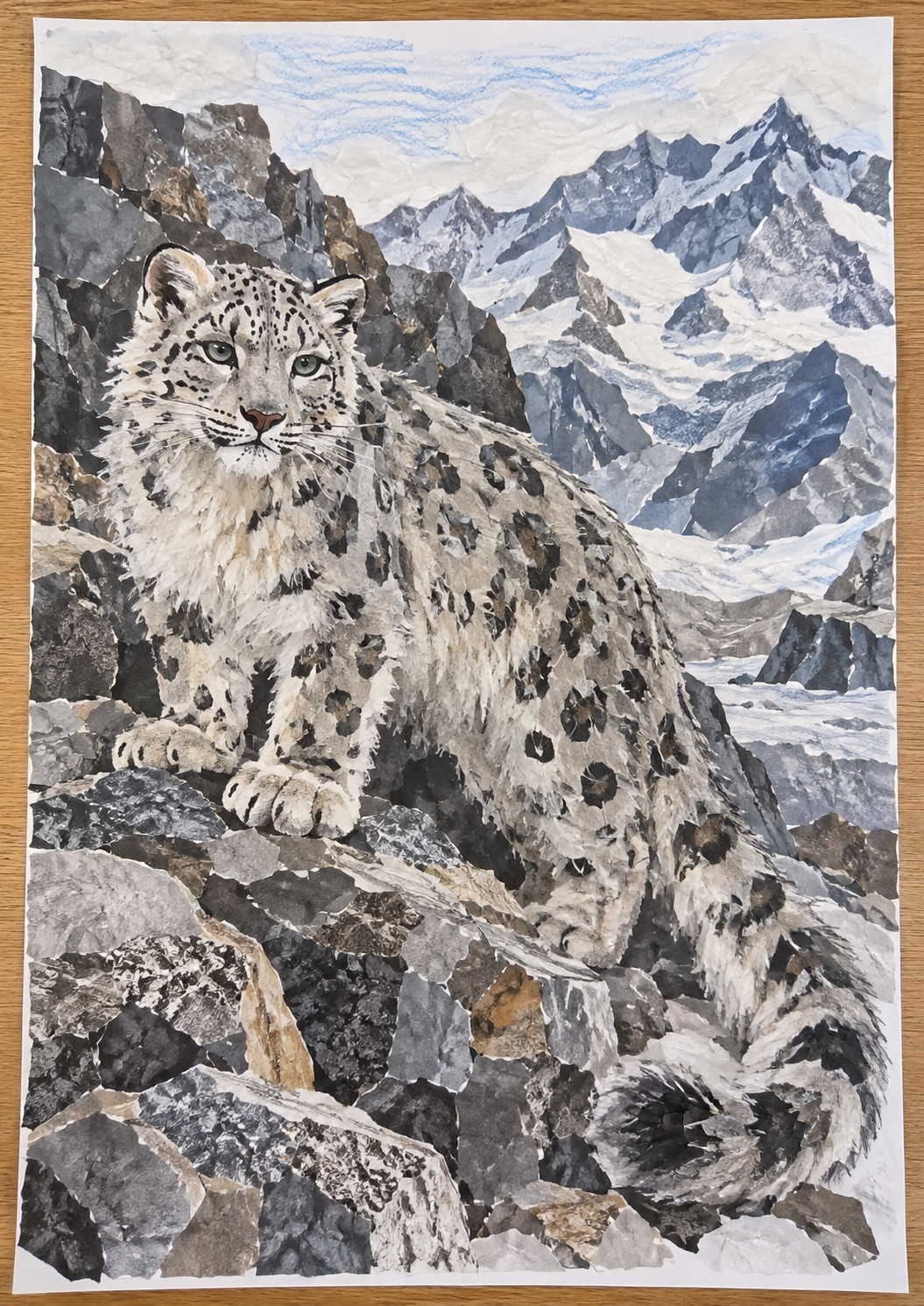
Art: Animals and Adaptation
LO: I can use colour, pattern and texture to communicate ideas in my artwork.
Today, you will use art to show how an animal is suited to the habitat where it lives.
Choose one of the animal fact files and read it carefully. Look closely at the photograph and think about the animal’s colours, patterns, body shape and special features.
Create a mixed-media artwork of your animal in its habitat. You may use drawing, colouring, torn paper, collage and different textures.
Your artwork should show:
-
the animal in its habitat;
-
at least two features that help it survive;
-
colours, patterns or textures that help the animal camouflage or cope in its environment.
For example, you could use torn white paper to show the thick fur and snowy habitat of an Arctic fox, or layer browns and greens to help a stick insect blend into branches.
When you have finished, be ready to explain:
My animal survives because...
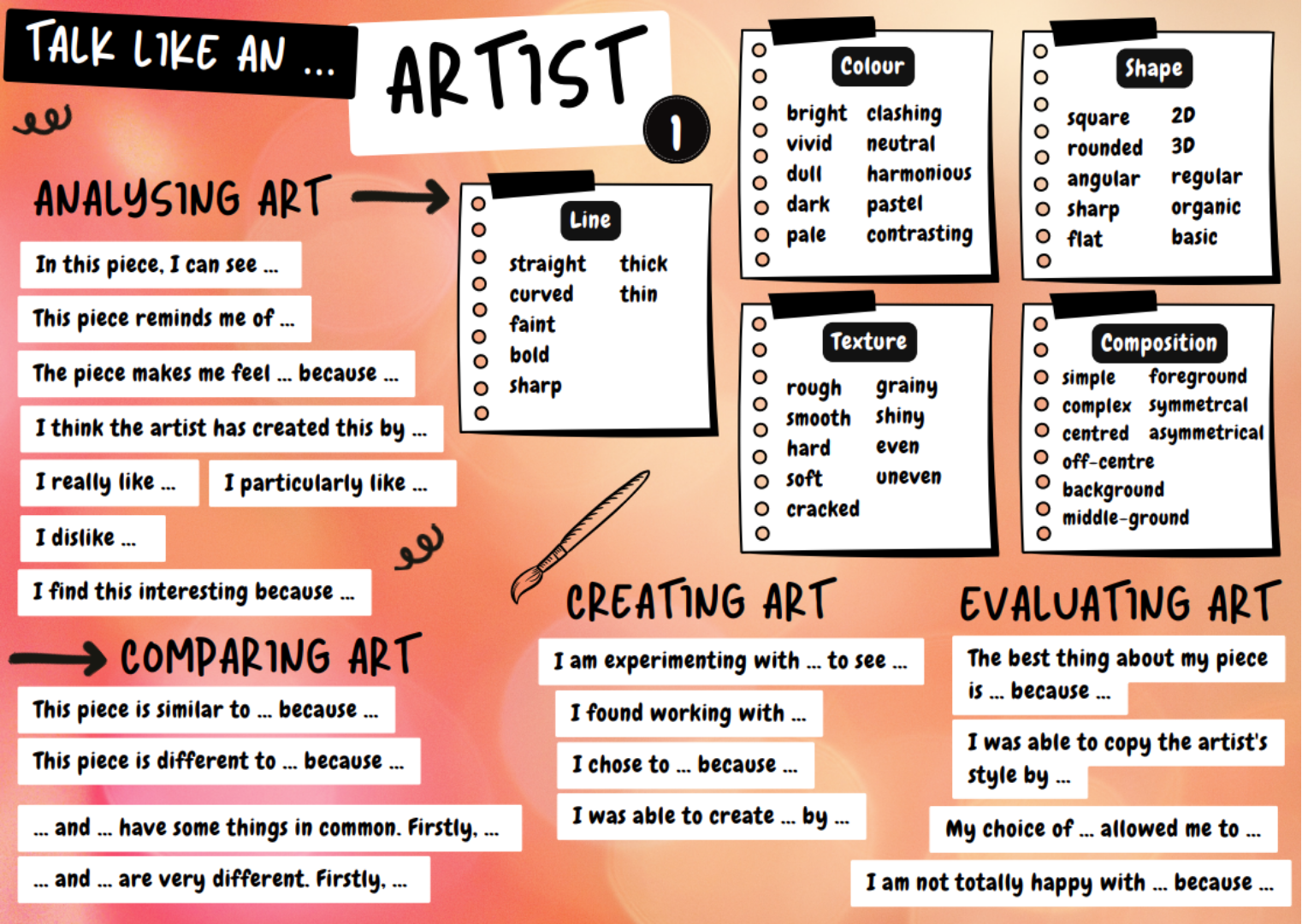
Tasc Tri
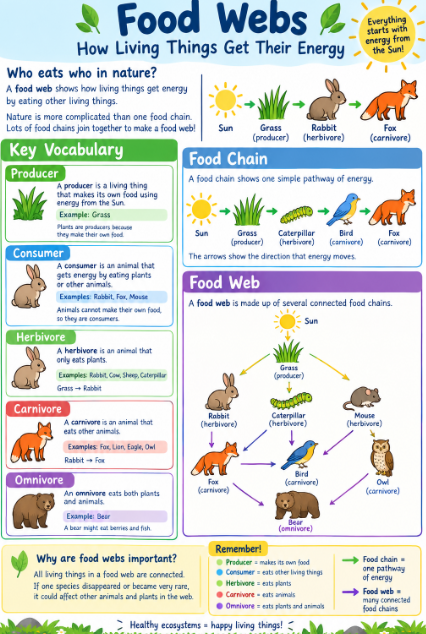
You are creating a leaflet for the younger children to teach them about food webs.
Your leaflet should explain the key vocabulary using diagrams, pictures and examples.
✅ Producer
✅ Consumer
✅ Herbivore
✅ Carnivore
✅ Omnivore
✅ Food Chain
✅ Food Web
Key questions to think about
Have I explained all of the key words?
Have I used scientific vocabulary correctly?
Is my leaflet bright, colourful and attractive?
Have I added diagrams and labels?
Have I explained what could happen if a living thing was removed from a food web?
Tasc Pedwar
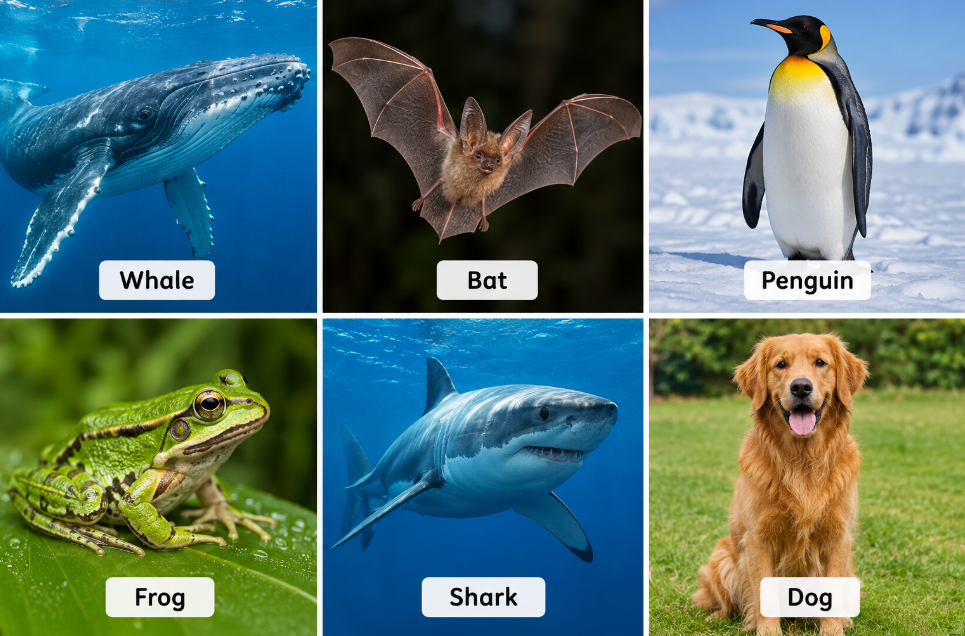
“I wonder… how could we categorise different types of animals effectively?”
-
Which animals belong to the same group?
-
How could we prove that our classifications are correct?
-
Is it enough to group animals by where they live?
-
What information would help somebody identify an animal?
Scientists classify animals using shared characteristics rather than simply their appearance or habitat.
Main activity – Animal research

Mammals
-
Have hair or fur at some stage of life.
-
Females produce milk to feed their young.
-
Most give birth to live young.
-
Examples: lion, dolphin, bat.

Birds
-
Have feathers and beaks.
-
Have wings.
-
Lay eggs.
-
Examples: penguin, eagle, ostrich.

Reptiles
-
Have dry, scaly skin.
-
Breathe using lungs.
-
Most lay eggs, although some give birth to live young.
-
Examples: snake, tortoise, crocodile.

Amphibians
-
Usually have moist skin.
-
Often begin life in water and undergo metamorphosis.
-
Many lay eggs in water.
-
Examples: frog, toad, newt.

Fish
-
Live in water.
-
Breathe through gills.
-
Most have fins and scales, although there are exceptions.
-
Examples: salmon, clownfish, shark.
Research at least five animals. Record the animal's name, group, habitat, diet and one or two distinguishing characteristics.
Planning the database on paper
What makes a good database?
- Consistent fields
- Accurate information
- Records that can be compared
key vocabulary:
-
Database: An organised collection of information.
-
Field: A type of information stored, such as animal name or habitat.
-
Record: All the information about one animal.
-
Category: A group used to classify information.
-
Sort: Arrange records in a particular order.
-
Filter: Show only records that match a condition.
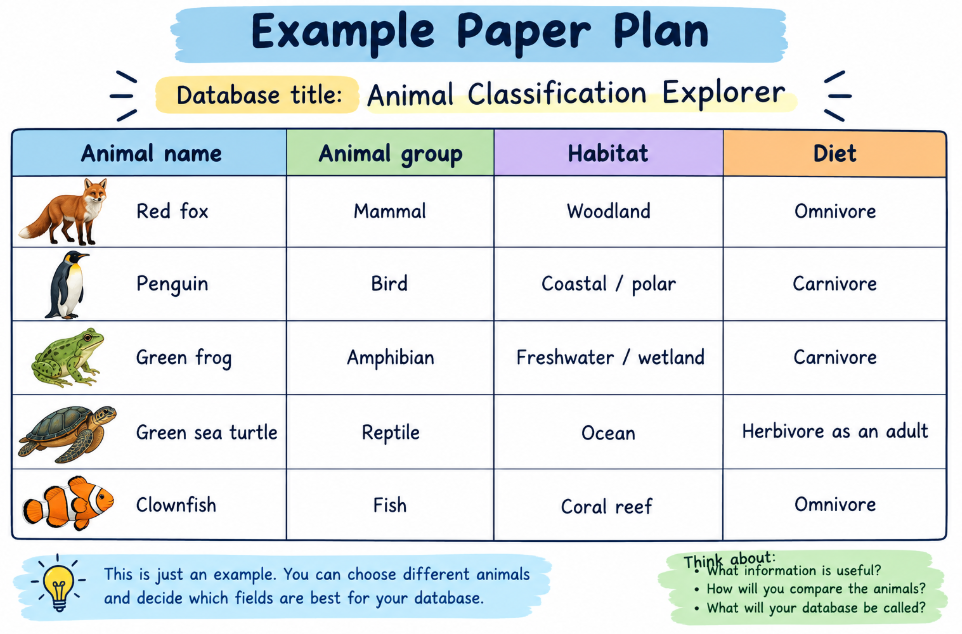
-
What will the database be called?
-
Which fields will it contain?
-
What information will each record include?
-
How many animals will they enter?
-
Which fields will help users compare animals?
-
How could a user find all mammals, animals that live in water or herbivores?
-
Are the chosen fields suitable for every animal in the database?
Creating the database
-
Open the J2e database tool and create a new database.
-
Give the database a clear, descriptive title.
-
Create the fields from the paper plan, choosing suitable field types where available.
-
Enter the animal records using their research notes.
-
Check that information is in the correct field and that spellings and facts are accurate.
-
Save the database and check that it is readable and organised.


